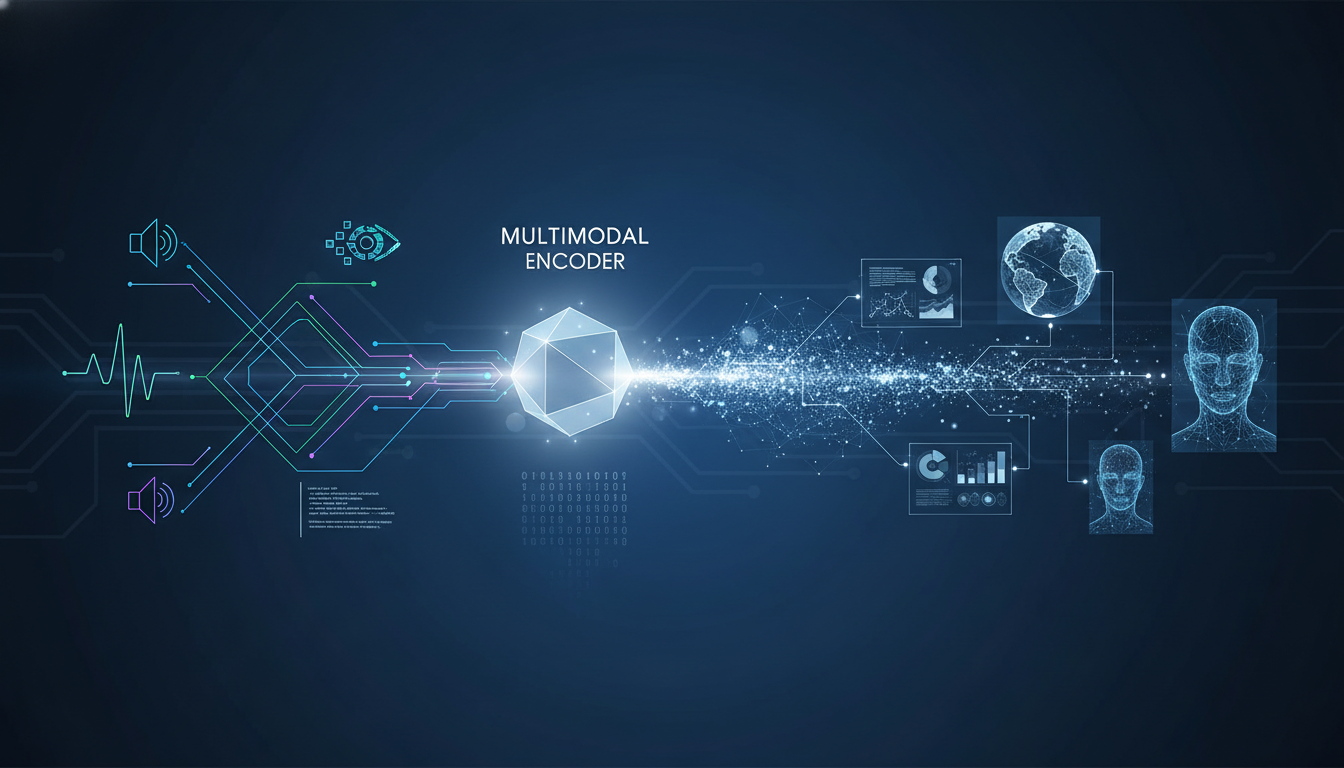
What an encoder does
Most people look at what AI produces. That might be text, images or recommendations. The part that makes this possible is the encoder. An encoder turns messy real-world data into numbers a machine can work with. Those numbers capture meaning, not just labels.
Encoders have changed a lot. They started as simple data converters. Now they can read text and images together. For a business leader, this matters because most company knowledge sits in documents, tables and scans.
The early days of encoding
At first, encoding was basic. Developers turned categories into numbers so a machine could read them. The system handled the data but did not understand it.
Take an early online shop. It might suggest products from fixed categories only. Someone buying running shoes would not see fitness accessories unless a person had set up that link. The encoder managed data, but not meaning.
Encoders that learn
Neural networks changed this. A neural network is software that learns patterns from many examples. Encoders stopped being fixed converters and began to learn from data.
In image recognition, developers no longer describe a cat by hand. They train the system on many pictures, and it finds the features itself. The same idea reached language. Words became lists of numbers that capture meaning. So a system can see that "cheap flights" and "budget airfare" mean the same thing.
Autoencoders and transformers
An autoencoder squeezes data down and then rebuilds it. To do this well, it must keep what matters and drop the rest. This helps in fraud checks, where the system learns normal transaction patterns and flags odd ones.
Transformers were the next step. Older models read data one piece at a time. A transformer looks at the whole input at once, so it can use context. In "She saw the man with the telescope," it can weigh which reading is more likely. This helps chatbots, voice dictation and live translation.
Multimodal encoders
A multimodal encoder handles more than one type of data, such as text and images, in the same system. A person can photograph a plant and ask how to care for it. A shopper can upload a photo to find similar products.
In a company, the same idea applies to scanned forms, tables and reports. One system can search all of them with a plain-language question.
Why it is hard in production
A demo on clean files is easy. Real company data is not clean. Scans are faint, tables are odd and files are in several languages.
Other issues come up too. Large models need a lot of computing power, which drives cost. Bias in training data can carry into results, so teams must check outputs over time. Encoders often touch sensitive data, so privacy and access rules matter from day one.
How we approach it
We embed forward-deployed AI engineers inside your team. They work on your real documents and your real workflow, not a sample set. That is where encoder choices succeed or fail.
We start with one use case and prove it on your data. Then we ship it to production with review steps, access controls and cost tracking. Finally, we hand it over, so your team can run and improve it. You can see the steps on our process page.
For search across documents, we build RAG systems. In retrieval-augmented generation (RAG), the AI looks up your documents before it answers. For scans and images, we add document AI and OCR, which reads text from images.
An example from our work
One example from our work: RAG search for a national statistics ministry: questions in Hindi, English and Kannada, by voice or text, with citations that link to the exact source page. 490+ legacy statistical tables indexed and queryable in plain language.
What it means for a business leader
- Ask whether your key knowledge sits in scans, tables or images. If so, text-only search will miss it.
- Test on your messiest files, not clean samples.
- Require citations, so people can check every answer.
- Plan for cost, privacy and bias review before launch.
- Make sure your own team can run the system after handover.
Next step
If your team has document search across text, tables and images in pilot but not in production, book a discovery call.
Saksham Gupta
Founder & CEO, EduBildSaksham Gupta is the founder and CEO of EduBild, which embeds forward-deployed AI engineers with enterprise teams to ship production AI. Ex-Daimler AG; KIT Germany.


