Many enterprises in India and beyond find themselves at the threshold of AI adoption, facing the daunting task of integrating AI systems into their operational frameworks. The challenge is not merely in selecting the right AI tools, but in preparing the organization to harness AI effectively, avoiding pitfalls like poor data quality and fragmented governance.
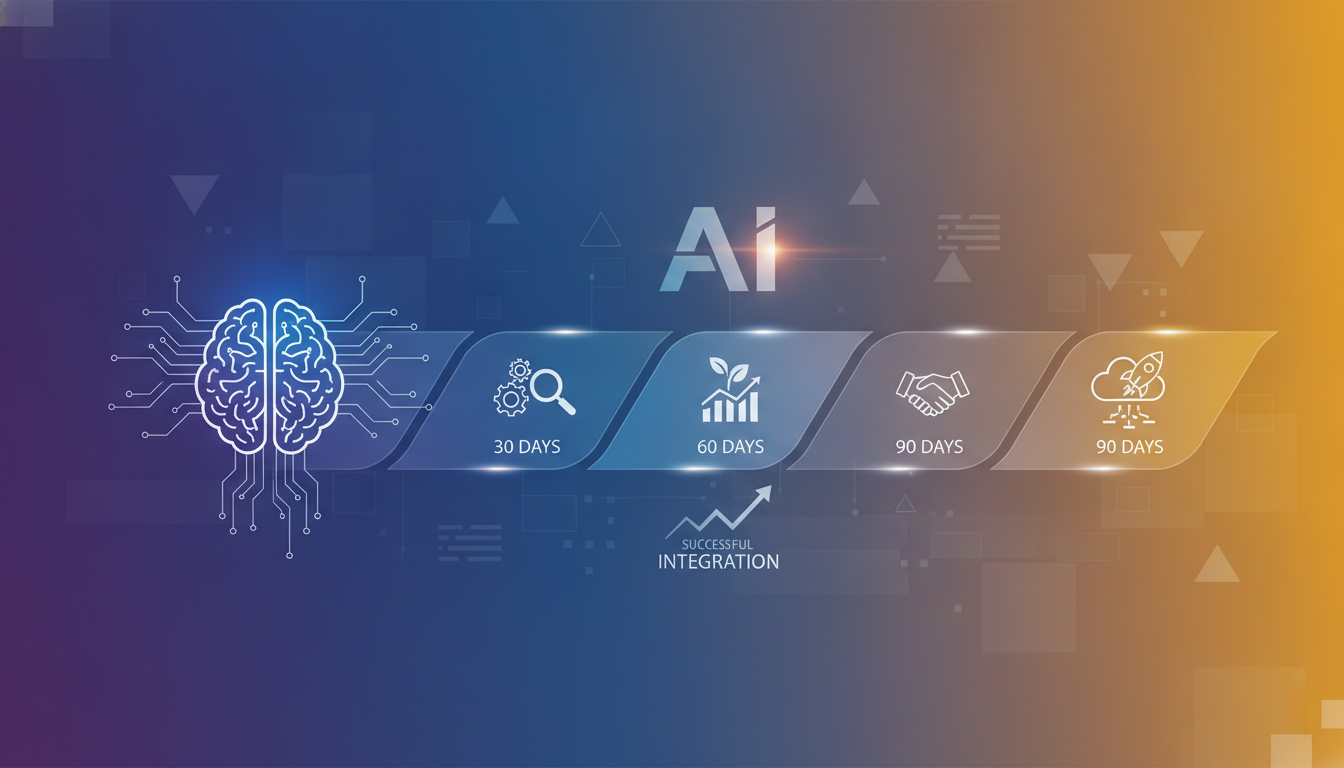
A 30-60-90 day roadmap is a strategic approach to AI integration that emphasizes preparation over immediate deployment. In the first 30 days, the focus is on assessing AI readiness and aligning AI initiatives with business objectives. The following 60 days are dedicated to building and validating AI solutions, while the final phase focuses on scaling and optimizing these solutions across the enterprise.
How do you assess AI readiness in the first 30 days?
The initial phase of the AI integration roadmap is crucial as it lays the groundwork for future success. In the first 30 days, enterprises should concentrate on evaluating their current capabilities and readiness for AI adoption. This involves conducting a thorough assessment of data quality, governance structures, and technology infrastructure. Key activities include:
- Executive Alignment: Engage with top leadership to ensure AI initiatives align with strategic business goals. This involves defining clear objectives and expected outcomes.
- Data Readiness: Evaluate the quality and accessibility of data, as AI outputs are heavily dependent on the data fed into the system. Poor data quality can lead to inconsistent results.
- Governance Frameworks: Establish governance protocols to manage AI processes and ensure compliance with regulatory standards.
By the end of this phase, enterprises should have a realistic picture of their AI maturity and a prioritized roadmap for implementation. For example, our work with India's Ministry of Statistics (MoSPI) RAG deployment involved similar foundational assessments to ensure data quality and alignment.
What happens during the build and validate phase (days 31-60)?
The second phase focuses on developing and piloting AI solutions. This involves modernizing data platforms and establishing an AI operating model that supports continuous improvement and scalability. Key steps include:
- Data Modernization: Upgrade data infrastructure to support AI capabilities. This might involve integrating OCR and document AI to streamline data input processes.
- Pilot Projects: Develop and test pilot AI projects that address specific business challenges. This helps in validating AI models and refining approaches before full-scale deployment.
- AI Operating Model: Establish a framework for AI operations, including roles, responsibilities, and workflows, to ensure effective AI integration.
This phase allows enterprises to test assumptions and refine their strategies, reducing the risk of large-scale failures.
How do you scale and govern AI solutions in days 61-90?
The final phase focuses on scaling AI solutions across the organization and establishing robust governance mechanisms to ensure sustained success. Key activities include:
- Enterprise Rollout: Expand successful pilot projects to other parts of the organization, ensuring that solutions are adaptable and scalable.
- Monitoring and Optimization: Implement monitoring systems to track AI performance and make necessary adjustments. This ensures that AI systems continue to deliver value over time.
- Change Management: Address the cultural and operational changes required for AI adoption. This involves training and enabling the workforce to work alongside AI tools effectively.
By focusing on governance and change management, enterprises can ensure that AI initiatives are sustainable and consistently aligned with business goals.
What this means for your organization
Implementing a structured 30-60-90 day roadmap for AI integration not only mitigates risks but also enhances the potential for deriving maximum value from AI investments. Organizations can expect improved data governance, streamlined operations, and better alignment with strategic objectives. This approach is particularly beneficial for enterprises in India, where regulatory compliance and data security are paramount.
By addressing foundational elements like data quality and governance early on, enterprises can avoid common pitfalls and ensure that AI initiatives are not just successful, but transformative. At EdubildAI, we specialize in on-premise LLM deployments and LLM fine-tuning that align with this structured approach, ensuring that your AI journey is both robust and compliant.
FAQ
What is the importance of executive alignment in AI integration? Executive alignment ensures that AI initiatives are aligned with business goals and have the necessary support and resources to succeed. It involves engaging with leadership to define clear objectives and outcomes.
How can enterprises ensure data quality for AI initiatives? Enterprises should conduct thorough assessments of their data quality and implement data governance frameworks. Tools like OCR and document AI can help streamline data input processes and improve accuracy.
What are the key risks of scaling AI solutions? Key risks include data security, compliance issues, and resistance to change. Implementing robust governance and change management processes can mitigate these risks and ensure successful scaling.
Ready to take the first step in your AI integration journey? Contact us to explore how EdubildAI can support your enterprise with tailored AI solutions.
Saksham Gupta
Founder & CEOSaksham Gupta is the Co-Founder and Technology lead at Edubild. With extensive experience in enterprise AI, LLM systems, and B2B integration, he writes about the practical side of building AI products that work in production. Connect with him on LinkedIn for more insights on AI engineering and enterprise technology.