Unplanned downtime is expensive. A stopped line means lost output, late orders and a stressed team. Equipment is also getting more complex, and fixed maintenance schedules often miss the early signs of failure. Many Indian manufacturers and industrial firms now want a better way.
AI-driven maintenance looks at data from your equipment to spot trouble early. It can warn your team before a machine fails. It can also help plan repairs for the right time, so crews fix what needs fixing and skip what does not.
How Does AI-Driven Maintenance Work?
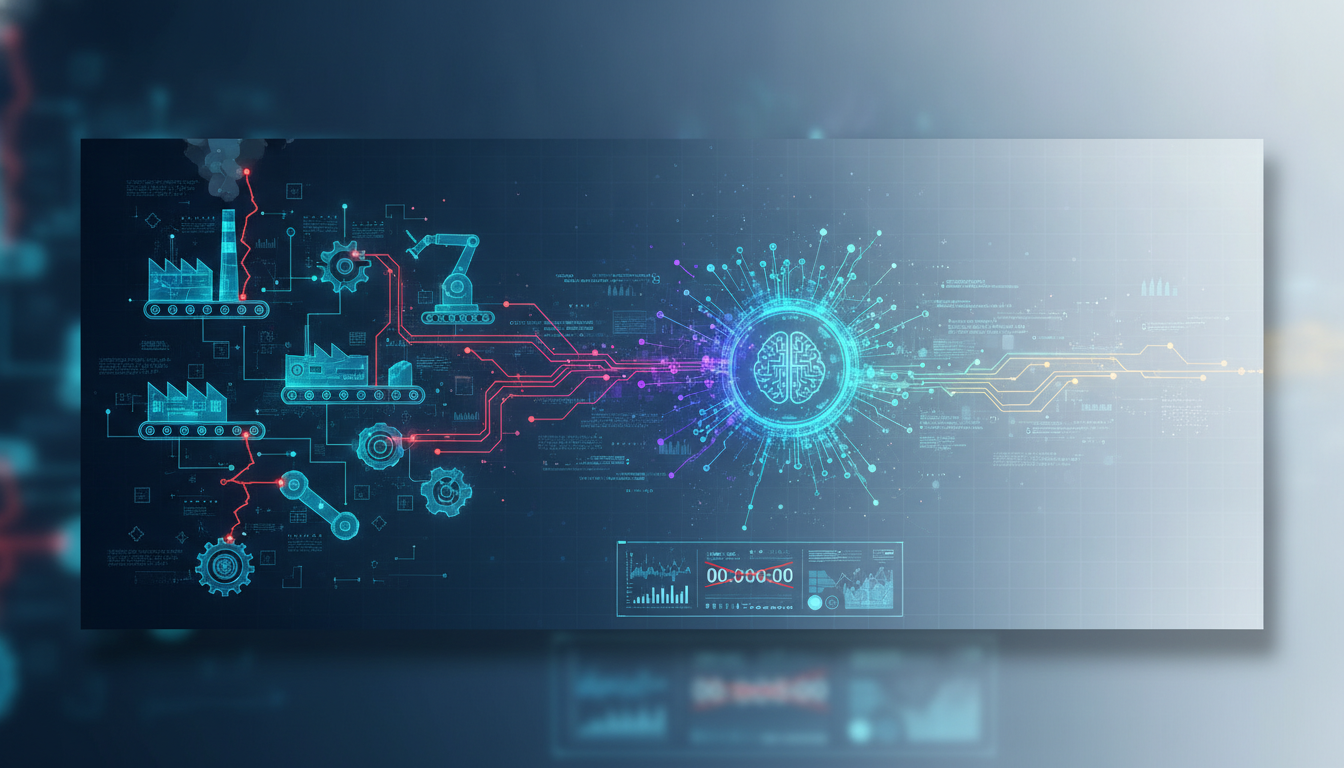
These systems use sensors that measure how a machine runs. The AI learns what normal looks like. It then flags readings that drift away from normal, because those drifts often come before a breakdown.
For example, in a semiconductor plant, sensors may track temperature, vibration and pressure. If vibration slowly rises, the system alerts the maintenance team. The team can then check the machine before it stops. This can also help equipment last longer.
What Are the Benefits of AI-Driven Maintenance?
The main benefit is fewer surprise stoppages. Each hour of unplanned downtime can cost a large plant a great deal. The second benefit is better schedules. Work is done when the data says it is needed, which can lower maintenance costs.
The third benefit is better decisions. Managers can see how each machine is doing. This matters in India, where sites are often spread across wide areas and no one can check every machine by eye.
How Can Enterprises Start?
First, review your current maintenance. List the machines that hurt most when they stop. Then check what data you already collect and whether your IT systems can share it.
Next, pick one line or one asset type and start small. Our RAG systems work is one useful tool here. RAG means the AI looks up your documents, such as repair manuals and past work orders, before it answers. A technician can then ask a plain question and get an answer based on your own records.
What Are the Challenges?
Data is the first hurdle. Plants often run machines from many makers, and each one stores data in its own way. Getting that data into one place takes real work.
People are the second hurdle. Your staff must trust the alerts and know what to do with them. That needs training and clear rules. You must also protect sensitive plant data. Some firms keep it inside their own walls with on-premise LLM deployment, where the AI model runs on your own servers.
How We Approach It
Most maintenance pilots work on a sample of clean data. They stall when they meet real plant data, real shift patterns and real budgets. We built our model to close that gap. Forward-deployed engineers from EduBild work inside your team, next to your maintenance and IT people.
We follow a clear path: discovery, prove, embed, scale and transfer. You can read more on our process page. We start with one problem that matters. We prove it on your data, then move it into daily use.
At the end, we hand it over. Your people learn to run, check and improve the system without us. One example from our work: An autonomous L1 IT support agent that resolves 70% of tickets without a human, around the clock.
What This Means for Your Organization
A prediction model that works in a pilot is not yet a production system. In production, your team needs to know who acts on an alert. It also needs a way to check alerts that look wrong, and a way to switch the system off for one plant while it is fixed.
You also need to track whether alerts led to better outcomes, and what the system costs to run. Plan for these from day one. Treat maintenance AI as part of daily work, not as a side project.
FAQ
Which industries benefit most? Industries with complex and costly equipment, such as manufacturing and energy. Stoppages are expensive there, so early warnings are worth more.
How is it different from traditional maintenance? Traditional maintenance often fixes things after they break, or on a fixed calendar. AI-driven maintenance uses data to act earlier and only when needed.
What ROI can we expect? It depends on your equipment, your data and how well the system is adopted. We would size it with you during discovery rather than quote a general figure.
Next Step
If your team has predictive maintenance in pilot but not in production, book a discovery call.
Saksham Gupta
Founder & CEO, EduBildSaksham Gupta is the founder and CEO of EduBild, which embeds forward-deployed AI engineers with enterprise teams to ship production AI. Ex-Daimler AG; KIT Germany.