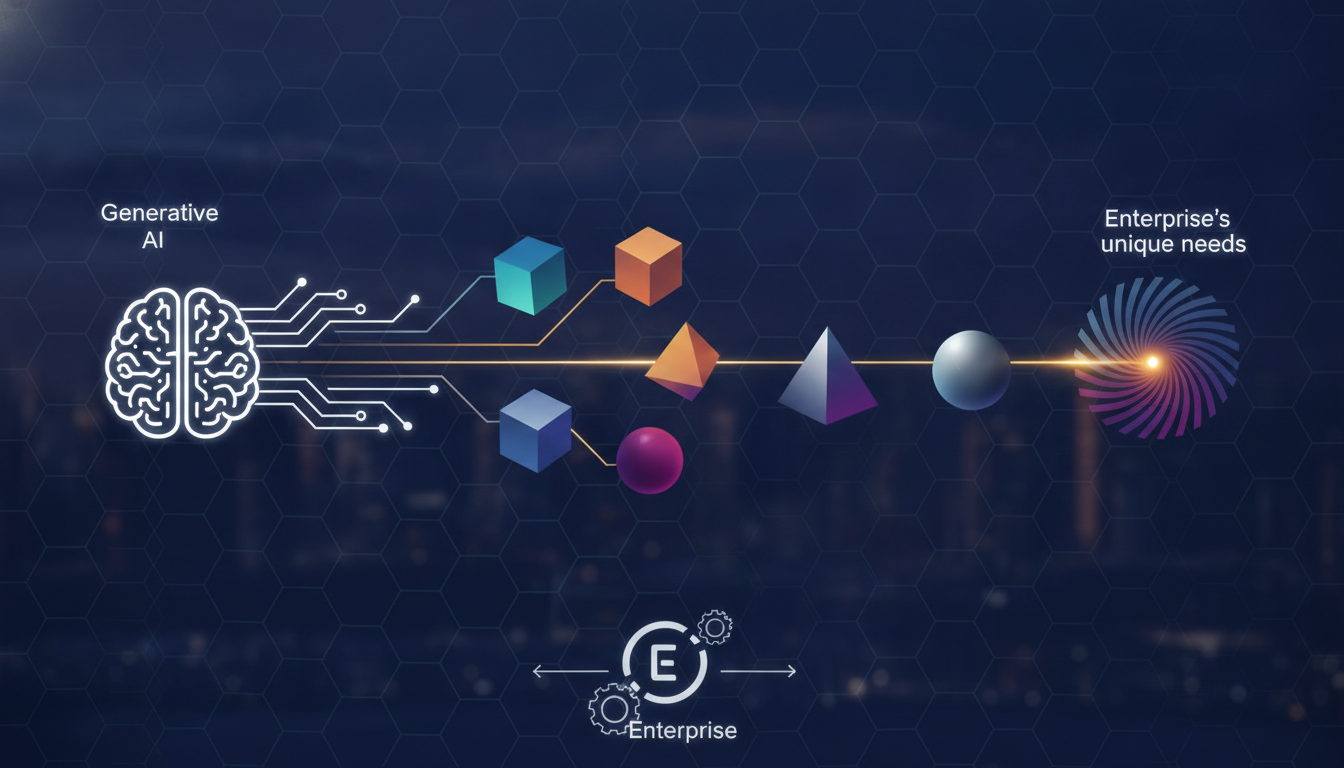
Choosing an AI model is hard for most enterprise teams. The choice is not only about how well a model scores in tests. It also depends on how the model fits your systems, your data rules and your goals.
Look beyond raw performance. Check how the model connects to your existing tools. Check whether it meets your data and security rules. Check what it costs to run, and where you can deploy it. The big vendors each offer different strengths, from handling text, images and audio together to helping with software work.
How does model integration affect enterprise systems?
A model that fits your current systems saves months of effort. It can reach your existing data and workflows with less custom work.
Some models connect closely with the Microsoft tools many companies already use. Others connect closely with Google's tools. If your teams work mainly in one of these, that link can make deployment easier. Check the vendor's current documentation before you decide, because these offers change often.
What role does data governance play in model selection?
Data governance means the rules for who can see your data and where it goes. Your AI must follow these rules and any laws that apply to you.
Some models are open-weight. This means you can download them and run them on your own servers. That gives you more control over where data sits. It can matter a lot in regulated industries. Ask your legal and security teams what you need before you shortlist models.
How do cost considerations influence model choice?
Cost matters most when many people use the system every day. Some models are built to be cheaper to run at high volume. Cost per request is only part of the picture.
A cheaper model may need extra servers, more security checks or more engineering time. Add these up before you compare. Also track cost after launch, so it does not grow unseen.
How do enterprise-specific needs dictate model selection?
Match the model to the job. A task with long documents, such as contracts or policy files, needs a model that handles long text well. A task with simple, high-volume questions may need a smaller, cheaper model.
The right choice also depends on how mature your AI work is. A team in its first pilot has different needs from a team running agents in daily operations.
How we approach it
We do not start with a model. We start with the workflow you want to improve. Our forward-deployed engineers work inside your team and learn your systems, data and rules first. Then we test a few models on your real tasks.
That test shows which model works for you, not which one tops a public chart. We build the first version with your people, so they see how it works. We keep the design flexible, so you can switch models later without a rebuild. See our AI agents work and our process.
At the end, we hand over the system, the tests and the know-how. Your team can then run it and change it on its own.
What this means for teams running AI in production
In production, the model is only one part. Models change, prices change and vendors retire old versions. Your system needs human review when the AI is unsure, audit trails, and a way to switch features off for a team. It also needs a way to watch cost and quality over time.
So pick a model you can test, measure and replace. For sensitive data, look at on-premise LLM deployment, where the model runs inside your own environment.
One example from our work: An autonomous L1 IT support agent that resolves 70% of tickets without a human, around the clock.
FAQ
What are the key factors when choosing an AI model?
Look at fit with your systems, data rules, running cost and how well it does your specific tasks.
How does data control affect model choice?
If your data must stay in a set place, choose a model you can run on your own servers. Check your legal duties first.
Why does cost matter so much?
The total cost includes servers, security work, support and usage. Count all of it, not just the price per request.
Next step
If your team has an unclear AI model choice in pilot but not in production, book a discovery call.
Saksham Gupta
Founder & CEO, EduBildSaksham Gupta is the founder and CEO of EduBild, which embeds forward-deployed AI engineers with enterprise teams to ship production AI. Ex-Daimler AG; KIT Germany.