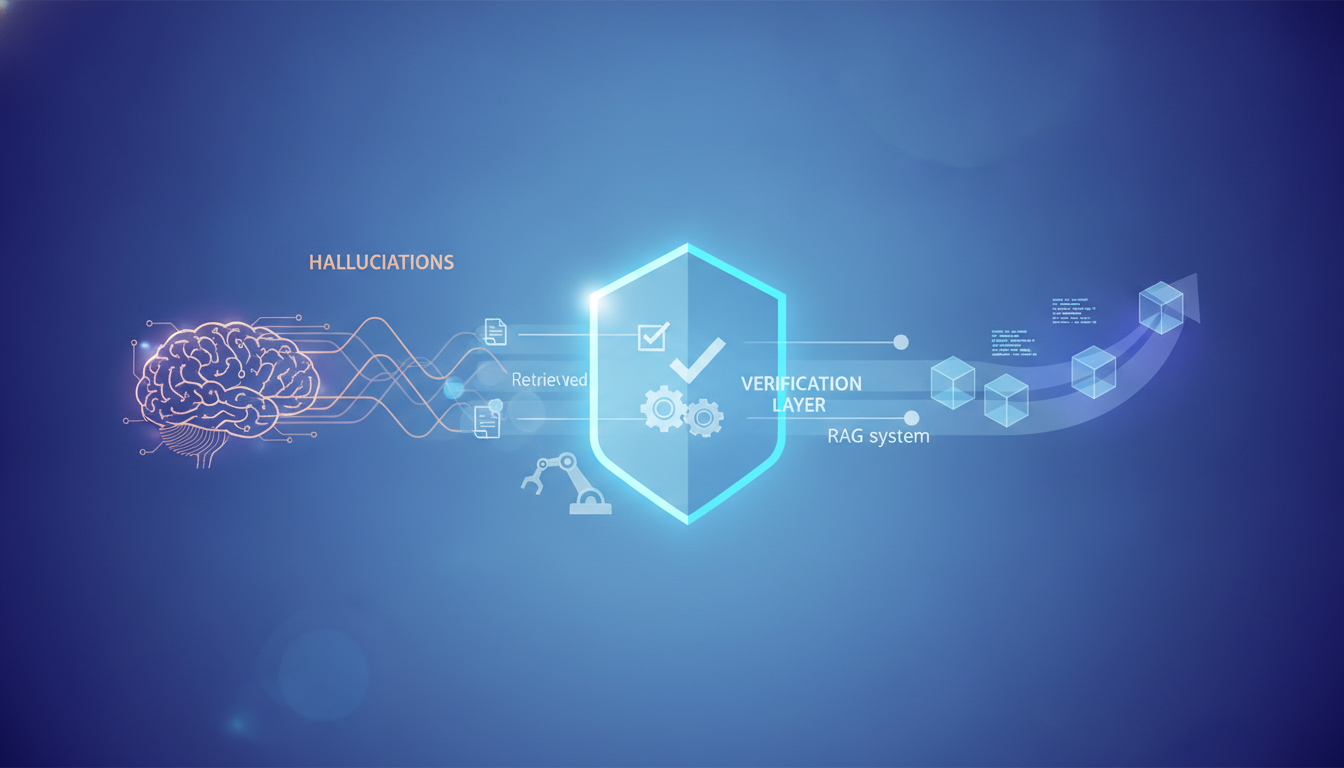
In enterprise environments, the risk of AI systems generating false information, known as hallucinations, poses a serious threat. This problem is especially pronounced in retrieval-augmented generation (RAG) systems, where incorrect data can be introduced into critical documents, leading to potential legal and financial repercussions. As organizations increasingly rely on these systems, the need for a robust verification layer becomes paramount.
Implementing a verification layer in RAG systems involves integrating a module that checks facts against multiple sources before the generation of text. This reduces factual errors significantly by ensuring that the information retrieved is accurate and relevant. The framework, developed by researchers at Carnegie Mellon and Anthropic, demonstrates a 73% reduction in error rates, highlighting its effectiveness in enterprise-scale operations.
Why Do RAG Systems Hallucinate?
RAG systems are designed to combine retrieval and generation capabilities, theoretically grounding AI responses in real-world documents. However, the complexity of enterprise knowledge bases can lead to various hallucinations. These include intra-chunk hallucinations, where details are misinterpreted within a single document; cross-chunk hallucinations, where information from multiple documents is incorrectly merged; and temporal hallucinations, where data from different time periods is inaccurately combined. Each type of hallucination poses unique challenges and can severely impact the reliability of AI-generated content.
The Role of Verification Layers
Verification layers act as a safeguard by introducing a secondary check on the data retrieved by RAG systems. The CMU-Anthropic framework, known as VERA, exemplifies this approach by decomposing user queries into atomic claims, which are then independently verified against a broader corpus of data. This process involves a secondary retrieval step focused on validating each claim, ensuring the integrity of the information before it reaches the user. This approach not only reduces error rates but also builds trust in AI outputs by providing a clear audit trail of verified sources.
Implementation Challenges and Solutions
Integrating a verification layer into existing RAG systems can be challenging. Enterprises must consider the computational overhead and potential latency introduced by additional verification steps. The VERA framework addresses these concerns by utilizing efficient models and optimized retrieval strategies that minimize delays. Moreover, organizations must ensure that the verification process is adaptable, capable of integrating with various data sources, and scalable to handle large volumes of queries typical in enterprise settings.
Practical Steps for Enterprises
To implement a verification-first approach, enterprises should start by evaluating their current RAG systems' error rates and identifying the most common types of hallucinations. Next, they can pilot a verification layer, such as VERA, to assess its impact on accuracy and performance. Training internal teams on the importance of verification and establishing protocols for human review of flagged content can further enhance the system's reliability. By taking these steps, organizations can significantly mitigate the risks associated with AI-generated misinformation.
What This Means for Your Organization
For organizations deploying RAG systems, the inclusion of a verification layer is not just a technical upgrade but a strategic imperative. It enhances the credibility of AI outputs, reduces the risk of costly errors, and aligns with regulatory compliance requirements. By investing in verification technologies, enterprises can ensure that their AI systems deliver accurate, actionable insights, fostering greater trust and adoption among users. Moreover, this approach is critical for maintaining competitive advantage in sectors where data accuracy is paramount, such as finance, healthcare, and legal services.
FAQ
What are RAG systems, and why are they important? RAG systems integrate retrieval and generation capabilities, allowing AI to generate responses grounded in real-world documents. They are crucial for applications requiring accurate and contextually relevant information, such as legal and financial analysis.
How does a verification layer improve RAG systems? A verification layer checks the facts against independent sources before text generation, reducing hallucinations and ensuring the reliability of AI outputs. This layer acts as a critical checkpoint, preventing the dissemination of false information.
What are the potential costs of RAG hallucinations for enterprises? The costs can be significant, including legal liabilities, regulatory fines, and reputational damage. A single incident of misinformation can cost millions, as reported by IDC, highlighting the need for robust verification mechanisms.
Ready to enhance your RAG system with a verification layer? Contact us to discuss how EduBild can help you implement this essential feature.
Saksham Gupta
Founder & CEO, EduBildSaksham Gupta is the founder and CEO of EduBild, which embeds forward-deployed AI engineers with enterprise teams to ship production AI. Ex-Daimler AG; KIT Germany.