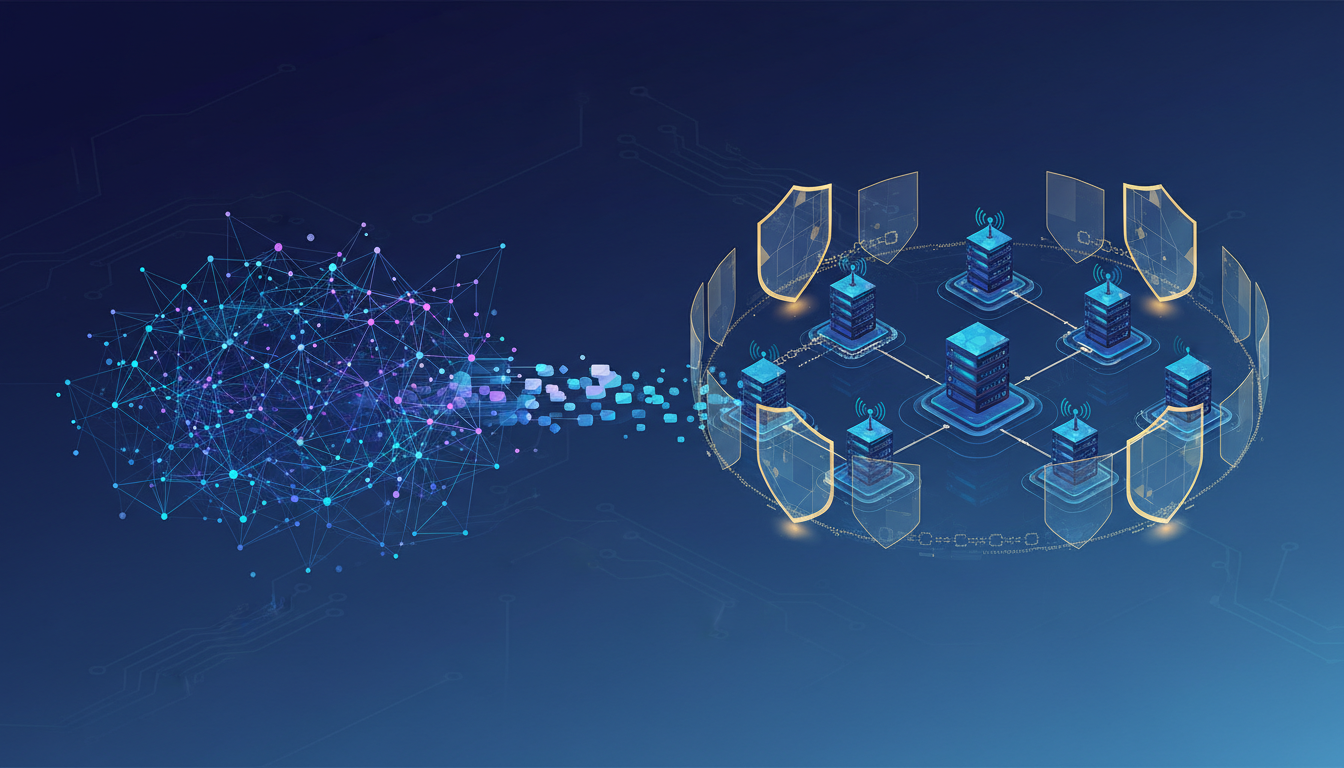
Many AI models now run on local devices instead of in a central data centre. This is called edge AI: the AI works close to where the data is created. It can be fast and can keep data close to where it is used. It also makes governance harder.
Why edge AI changes governance
In the cloud model, IT can see most traffic and control most systems. Edge AI moves the work onto laptops, machines and site hardware. Some uses are factory equipment and field devices.
Newer open models are built to run on local hardware. Some of them can work without sending data over the company network. That makes network monitoring a weaker control. If the model runs offline, there may be little traffic to watch.
Challenges in governing edge AI workloads
Control is spread across many places. This creates three main problems:
Security: Edge devices are often less protected than a data centre. Sensitive data on them can be at risk.
Auditability: Privacy and data rules require you to show how data is handled. That is harder when processing happens outside central systems.
Data privacy: Data on a device needs strong encryption and tight access control. Leaks and unauthorised access must be prevented.
Strategies for strengthening governance
Enterprises need clear rules built for edge environments. These four steps are a good start.
Set strict access controls
Decide what each AI process may do. Limit which files it can open, which databases it can query and which system actions it can take. Only approved processes should run sensitive tasks.
Strengthen endpoint security
Endpoint detection and response tools watch devices for unusual activity. Check that yours can tell normal applications from unapproved AI models running on a device. Then your team can see what is running and where.
Keep logs, even offline
Keep a record of key events and of the decisions the AI makes. Store it on the device when offline and sync it when the device reconnects. These records help with audits and with investigations after a problem.
Build awareness
Train staff on what edge AI can do and which tools are approved. This reduces shadow IT, where people install software IT has not approved.
How we approach it
We are forward-deployed engineers. We work inside your team to build and ship AI agents, and then we hand them over. Governance is part of that build from the start, not added at the end.
Every agent we ship has controls your team can use. There are per-team on/off switches, so a team can pause an agent without a code change. There are audit trails, so you can see what the agent did and why. Human review applies when the agent's confidence falls below a threshold you set.
Where data must stay inside your walls, we also look at on-premise LLM deployment. Our process gives your team the skills and documentation to run these controls after handover.
Next step
If your team has edge AI governance in pilot but not in production, book a discovery call.
Saksham Gupta
Founder & CEO, EduBildSaksham Gupta is the founder and CEO of EduBild, which embeds forward-deployed AI engineers with enterprise teams to ship production AI. Ex-Daimler AG; KIT Germany.


