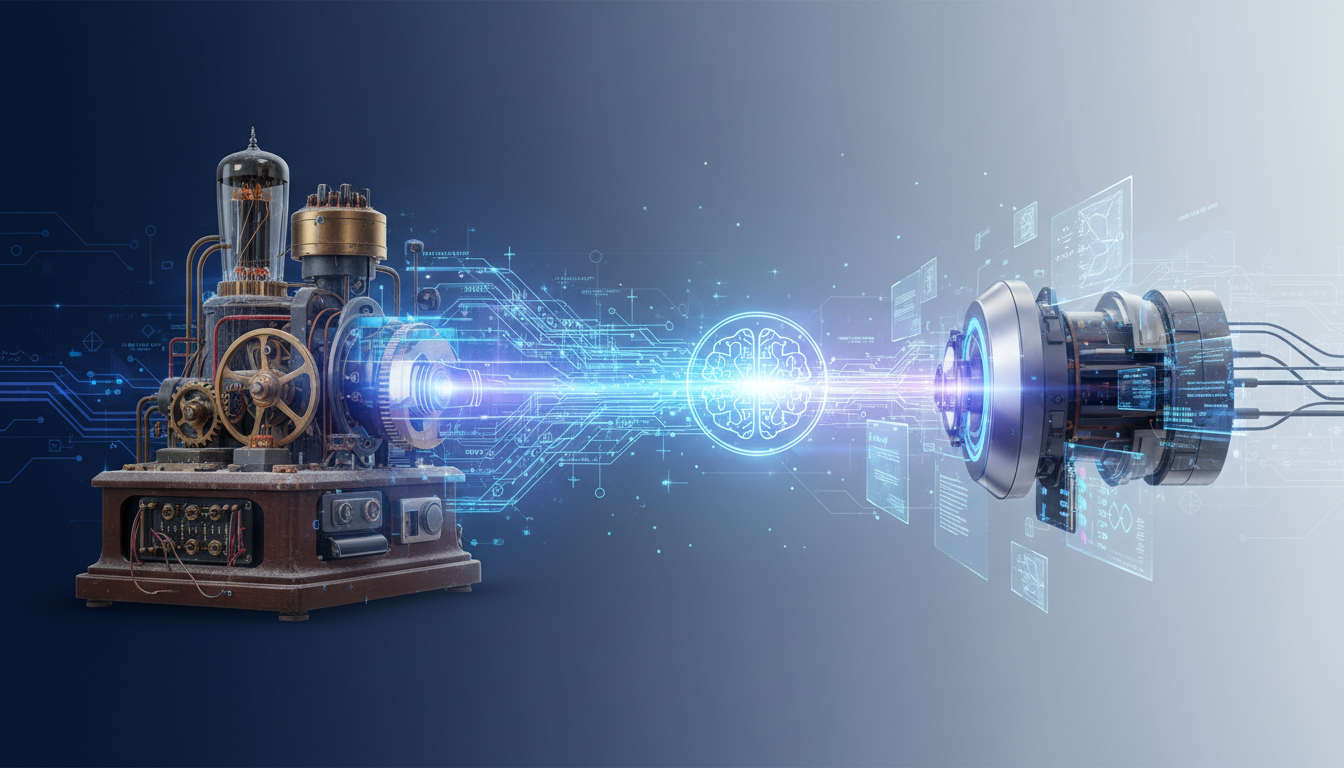
Many manufacturers want AI on the factory floor. Few start by asking what their oldest machines can tell them. Some of those machines have run for decades. Adding modern sensors keeps that investment and gives your team data it never had.
The challenge of legacy equipment
Many factories run the same equipment for 20 or 30 years. This is common in pharmaceuticals, automotive and food processing. The machines are tough and reliable. But they have no digital connection, so they cannot report what they are doing.
Without a steady stream of clean data, AI has little to work with. Pilots then stall. The model may be fine, but the data is missing.
Retrofitting: a practical option
Retrofitting means adding sensors and data connections to machines you already own. It is usually less disruptive than buying new machines. It can also help in regulated industries, where new equipment often triggers long validation work.
The sensors sit outside the machine. They track simple signals such as vibration, temperature and motor current. Each reading carries a time stamp. The machine's core functions stay the same, so production does not have to stop.
What real-time data changes
With sensors in place, managers can see what each machine is doing as it happens. They can move from reacting to problems to preventing them. Instead of guessing why a line was down, they can measure the downtime and find the cause.
Food and beverage lines show why this matters. Small stops in packaging or bottling can cut output a lot. With live data, teams spot these stops sooner and fix them faster. The equipment itself does not change.
Measuring with OEE
Many plants track overall equipment effectiveness (OEE). It combines three things: how long a machine is available, how fast it runs, and how much of its output is good. When machine states are visible, your team can measure each part and decide where to act first.
What AI-ready really means
Being AI-ready does not mean a floor full of robots. It means a reliable stream of data about what your machines are doing. Once you have that, you can add AI for predicting maintenance needs and checking quality.
The first gains are clear: better visibility, quicker decisions and fewer surprises. Plants that already hold daily reviews can use this data right away.
How we approach it
We are forward-deployed engineers. That means we work inside your plant team, not from a distance. We sit with maintenance, quality and operations staff and learn how the work really happens. Then we agree which machines and which decisions to start with.
From there we build AI agents that use the sensor data to support those decisions. Examples are flagging a machine that is drifting, or helping prioritise maintenance. We ship to production in small steps, so your people see value early and can trust it. See our process and our work on AI agents.
We also plan the handover from day one. Your engineers learn how the system works, how to check it and how to extend it. The aim is that your team runs it without us.
Next step
The path to a digital factory does not always start with the newest technology. Often it starts with the machines you already have and a reliable flow of data from them.
If your team has machine data for AI in pilot but not in production, book a discovery call.
Saksham Gupta
Founder & CEO, EduBildSaksham Gupta is the founder and CEO of EduBild, which embeds forward-deployed AI engineers with enterprise teams to ship production AI. Ex-Daimler AG; KIT Germany.


