In the rapidly evolving retail industry, the need for scalable infrastructure to support real-time personalization is more critical than ever. Enterprises face the challenge of adapting their systems to meet the demands of personalized customer experiences while maintaining efficiency and scalability. As consumer expectations rise, traditional static systems fall short, necessitating a shift towards dynamic, real-time solutions.
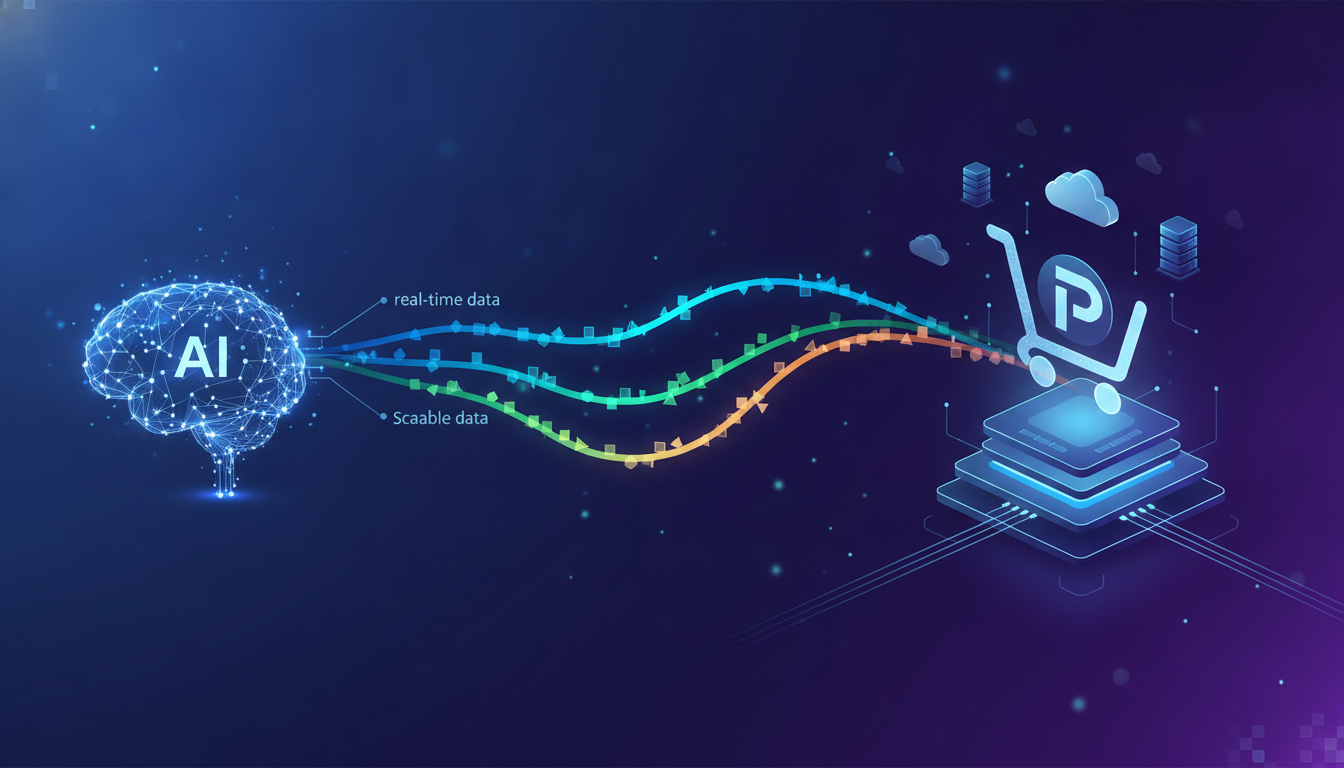
Building a scalable infrastructure for real-time personalization involves integrating advanced AI systems that can process and analyze data in real-time to tailor customer interactions. This requires a combination of robust data pipelines, generative user interfaces, and edge computing solutions. By deploying these technologies, retailers can enhance customer satisfaction and drive revenue growth.
What role do generative user interfaces play in personalization?
Generative User Interfaces (GUIs) are pivotal in transforming the way retailers interact with customers. Unlike static interfaces, GUIs leverage predictive models to dynamically adjust layouts, content, and interactive components based on real-time data such as clickstreams and purchase history. This approach allows for a personalized shopping experience tailored to individual customer preferences.
According to a McKinsey study, 76% of consumers express frustration when digital experiences do not meet their needs. Implementing GUIs can increase purchase frequency by 35% and boost average order values by 21%. These interfaces not only enhance user engagement but also contribute to higher conversion rates, making them essential for scalable retail AI deployments.
How does multi-modal data processing enhance customer insight?
In the digital age, relying solely on text-based data is insufficient for capturing comprehensive customer insights. Modern retail AI systems must process multi-modal data, including video, audio, and images, to gain a holistic understanding of consumer behavior. Video content alone accounts for 82% of internet traffic, underscoring the necessity for systems that can analyze such data.
Multi-modal social listening platforms enable retailers to identify trends and sentiments across various media, providing a competitive edge. An effective infrastructure must support the integration of these platforms to ensure timely and accurate insights, allowing businesses to adjust their strategies proactively.
Why are synthetic user simulations important for retail AI?
Synthetic user simulations offer a revolutionary approach to testing and refining retail strategies. By utilizing virtual personas based on large language models, retailers can simulate consumer behavior and test different scenarios without the need for extensive human focus groups. This method accelerates the testing process and reduces costs.
These simulations enable retailers to conduct thousands of automated interviews and stress tests, identifying potential issues before they impact live operations. Continuous updates with real human data ensure that these virtual personas remain aligned with current market realities, enhancing the accuracy and relevance of the insights gained.
How does edge computing support real-time personalization?
Edge computing is crucial for processing data locally and enabling real-time personalization. By deploying processing capabilities closer to the data source, such as on the retail floor, edge computing reduces latency and increases the responsiveness of AI systems. This is particularly important for applications like registerless checkout and real-time inventory tracking.
With edge computing, retailers can process sensor data locally, minimizing the need to transmit large volumes of data to centralized servers. This not only enhances the speed of data processing but also improves data security by reducing exposure to potential breaches during data transmission.
What this means for your organization
For retail enterprises, building a scalable infrastructure for real-time personalization is not just an option but a necessity. It involves investing in advanced AI technologies and robust data processing systems that can handle the demands of modern consumer expectations. Organizations must prioritize the integration of multi-modal data processing and edge computing to stay competitive.
Partnering with a consultancy like EdubildAI can provide the expertise needed to navigate these complexities. Our experience with projects like the Ministry of Statistics RAG deployment and Cleo's Zendesk RAG over support tickets demonstrates our capability to deliver tailored solutions that meet specific business needs.
FAQ
What is the biggest challenge in building a scalable retail AI infrastructure? The biggest challenge is integrating diverse data sources and ensuring that the system can process and analyze data in real-time to provide personalized experiences without compromising on speed or accuracy.
How can synthetic user simulations benefit retail businesses? They allow for rapid testing of new strategies and designs, reducing the time and cost associated with traditional focus groups and ensuring that products and services are aligned with consumer expectations.
What is the role of edge computing in retail AI deployments? Edge computing processes data locally, reducing latency and enhancing the speed and security of real-time personalization efforts, making it essential for responsive retail environments.
To explore how EdubildAI can help your organization implement scalable AI infrastructure, contact us today.
Saksham Gupta
Founder & CEOSaksham Gupta is the Co-Founder and Technology lead at Edubild. With extensive experience in enterprise AI, LLM systems, and B2B integration, he writes about the practical side of building AI products that work in production. Connect with him on LinkedIn for more insights on AI engineering and enterprise technology.